
Summary: Transforming Your Space on a Budget
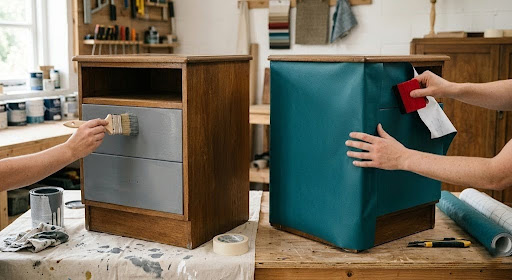
Deciding between wrapping and painting can make or break your upcycling project. If you want a mess-free, durable, and renter-friendly solution, using vinyl wrap for furniture is the ultimate choice. It completely eliminates drying time and messy prep work, giving you an instant, flawless finish.
- Mess-free application: No sanding, priming, or noxious paint fumes are required.
- Highly durable: Water-resistant and perfect for high-traffic areas in busy homes.
- Endless designs: Achieve hyper-realistic wood, marble, or tile finishes instantly.
The Great DIY Debate: Furniture Wrap or Paint?
Furniture wrap is widely considered the superior choice over paint for DIY projects. It provides a flawless, durable finish in hours without the toxic fumes, messy sanding, or lengthy drying times associated with traditional liquid paint.
Are you tired of staring at outdated wardrobes or scuffed kitchen counters? You are certainly not alone in wanting a fresh, bespoke aesthetic for your home. The desire to refresh our living spaces on a budget is bigger and more popular than ever.
However, when faced with an exciting DIY furniture transformation, the biggest question is always how to actually execute it. Many of us dread the thought of endless sanding, strong primer smells, and uneven brush strokes. It can feel utterly exhausting before you have even opened a single tin of paint.
That is exactly why the modern upcycler needs a more practical, forgiving method. Let us explore exactly why peel-and-stick solutions are taking over the interior design world.
Is Vinyl Wrap Better Than Paint?
Yes, vinyl wrap is generally better than paint because it requires zero sanding, creates no mess, and is instantly ready to use. It offers a flawless, durable finish that is completely renter-friendly and easy to apply.
When looking at vinyl wrap vs painting furniture, the preparation phase is the most obvious differentiator. Painting requires hours of tedious sanding, applying toxic primers, and waiting through long drying times between multiple coats. You also have to constantly worry about stray brush marks ruining that perfectly smooth aesthetic.
In wonderful contrast, self-adhesive film completely skips this exhausting process. Decorwrap films are designed for absolute ease, allowing you to bypass the messy construction stages entirely. You simply clean your surface, peel back the backing paper, and smooth the film down.
The Reality of Messy Prep Work
Nobody wants their home covered in fine sanding dust for weeks on end. Traditional painting is incredibly messy and often requires moving heavy furniture outdoors or into a garage. This makes the whole process highly inaccessible for anyone living in a standard apartment or flat.
Architectural film is entirely mess-free and can be applied right inside your living room without laying down drop cloths. The lack of noxious fumes means you can safely upcycle your items around children and pets. This transforms a stressful, week-long chore into a fun, rewarding afternoon project.
“The beauty of architectural film is that it completely democratises interior design,” explains Patrick Green, Founder of Decorwrap. “You do not need to be a professional tradesperson to achieve a luxury, bespoke finish in your own home.”
What Is the Best Way to Update Furniture in the UK on a Budget?
The most affordable way to modernise your home is to use architectural film rather than replacing items. It saves thousands of pounds compared to buying new pieces or hiring professional decorators.
If you are wondering what the best way to update furniture in the UK is right now, just look at the soaring costs of professional renovations. A recent study of home renovation trends revealed that the average cost of a new kitchen in the UK is around £17,500. That is a completely unrealistic figure for the average homeowner wanting a stylish refresh.
Instead of tearing out perfectly functional cabinets, a clever furniture wrap or paint project saves your hard-earned budget. Upcycling lets you achieve a premium look for a fraction of the intimidating price tag.
A Cost-Effective, Renter-Friendly Solution
For tenants, the options for updating a property are usually incredibly limited. Landlords rarely allow you to paint original cabinets, leaving you stuck with an outdated aesthetic you dislike. This is where high-quality peel-and-stick film truly shines as a hero product.
Decorwrap is beautifully, easily reversible, making it the ultimate renter-friendly upgrade. You can enjoy your stunning new look for years, then simply use a hairdryer to gently remove it when your tenancy ends.
Upgrading your space with a premium kitchen cabinet vinyl wrap delivers that exact showroom finish without upsetting your landlord. It empowers you to make a house feel like your home, entirely on your own terms.
How Does the Quality and Durability Compare?
Vinyl wrap offers superior durability against everyday wear compared to standard furniture paint. It is inherently water-resistant, wipeable, and highly resistant to the chips and scratches that plague painted surfaces.
We all want our hard DIY work to last, especially in busy, spill-prone areas like kitchens and family rooms. Painted surfaces often chip easily when accidentally knocked, requiring frustrating touch-ups and colour-matching down the line. Decorwrap products, however, are engineered to withstand the daily chaos of a lively household.
High-quality self-adhesive films provide a tough, wipe-clean barrier that actively protects your original surfaces. This makes them exceptionally durable and the perfect solution for updating high-traffic zones.
Everyday Wear and Tear
Moisture is the absolute enemy of a painted finish, often causing it to bubble and peel around sinks or kettles. Architectural wrap provides a reliable waterproof seal that makes cleaning up spills completely effortless. You just wipe it down with a damp cloth and mild detergent.
This superior resilience gives you total peace of mind in busy family homes. Whether it is sticky toddler fingers or a spilled cup of coffee, your beautiful new finish remains unbothered.
The Environmental Impact: Upcycling Over Landfill
Choosing to upcycle your existing furniture is one of the most powerful eco-friendly choices you can make today. It dramatically reduces landfill waste and significantly lowers your household carbon footprint.
We are currently throwing away an alarming amount of perfectly usable homeware just because the colour is slightly outdated. In fact, research by Waste to Wonder reveals that the UK discards approximately 670,000 tonnes of furniture every single year. This is a shocking statistic that highlights the desperate need for more sustainable DIY practices.
Furthermore, statistics from HIPPO Waste highlight that manufacturing new furniture produces up to 1000 times more CO2 than simply refurbishing old pieces. By choosing to refresh rather than replace, you are actively protecting the environment.
Sustainable Choices at Home
The modern fast-furniture culture is simply not sustainable for our planet or our wallets. When comparing vinyl wrap vs painting furniture, both brilliant methods keep heavy items out of the local skip.
However, wrapping ensures a cleaner, fume-free environment inside your home while saving the environment outside. It feels incredibly rewarding to give an old, tired piece of furniture a glamorous second life.
How to Apply Vinyl Wrap to Furniture
Applying architectural film is a simple, straightforward process requiring only basic tools and a little patience. Proper surface preparation and taking your time are the ultimate keys to a flawless, bubble-free result.
You absolutely do not need to be an expert to master a seamless application on your first try. If you have been searching for how to apply vinyl wrap to furniture, just follow these simple steps for success:
- Clean Thoroughly: Remove all grease, grime, and dust using a strong degreaser, ensuring the surface is completely dry.
- Measure and Cut: Leave a generous two-centimetre overhang on all edges to allow for easy adjustments during fitting.
- Peel and Stick: Peel the backing paper away slowly, working in small sections to maintain control.
- Smooth and Seal: Push out air bubbles firmly with a felt-edged squeegee, working from the centre outwards.
- Heat for Corners: Use a standard hairdryer on a warm setting to gently stretch the film around tricky corners for a seamless finish.
Always remember that our films are highly forgiving and designed for beginners. If you make a mistake or spot a bubble, simply lift the film gently and reposition it without any stress.
Common Mistakes to Avoid When Upcycling Furniture
The biggest mistake beginners make is rushing the preparation stage or stretching the film too tightly. Taking your time, measuring carefully, and using a hairdryer for edges will guarantee a professional-looking result every time.
When taking on a DIY project, it is perfectly normal to feel a little bit nervous. However, avoiding a few common pitfalls makes the entire process incredibly smooth. For example, never skip the cleaning phase, as trapped grease is the main reason adhesives fail to stick properly.
Another common error is peeling away the entire backing paper at once, which usually results in a tangled, sticky mess. Always work in manageable sections, using your squeegee to methodically push out any trapped air. If you do happen to crease the film, just gently apply heat to relax the material back into shape.
Styling Your Space: Paint or Wrap Kitchen Cabinets?
Wrapping your cabinets provides instant access to modern textures and patterns that liquid paint simply cannot replicate. You can achieve hyper-realistic wood grains or sleek matte finishes in just a few hours.
If you are currently debating whether to paint or wrap kitchen cabinets, consider the design limitations of a basic tin of paint. Paint restricts you entirely to flat, solid colours, whereas architectural films unlock a whole new world of bespoke textures.
You can easily embrace the trendy industrial aesthetic with a rust patina finish or brighten a dull splashback with a stunning tile effect vinyl wrap.
Trend-Led Designs for Every Room
Whether you love a minimalist Scandi vibe or a bold maximalist look, there is a wrap to suit your vision. You can completely transform your living room by wrapping a cheap coffee table in a luxurious marble effect.
The design possibilities are genuinely endless when you are no longer limited by your budget or DIY experience. It is the ultimate creative hack to inject your unique personality into a boring, standard-issue property.
Embracing New Textures
One of the most exciting aspects of self-adhesive film is the ability to mimic high-end materials. A realistic Terrazzo print can instantly modernise a tired bathroom vanity without the expense of real stone. Similarly, deep wood grain textures add incredible warmth to stark, clinical bedrooms.
These textured finishes are completely impossible to achieve with standard liquid paint. By choosing to wrap your furniture, you are opening the door to a truly bespoke, designer look for your home.
Ready to start your next upcycling project? Contact Decorwrap today for advice on measurements, styles, or application tips, and let’s transform your space.